June 23, 2026
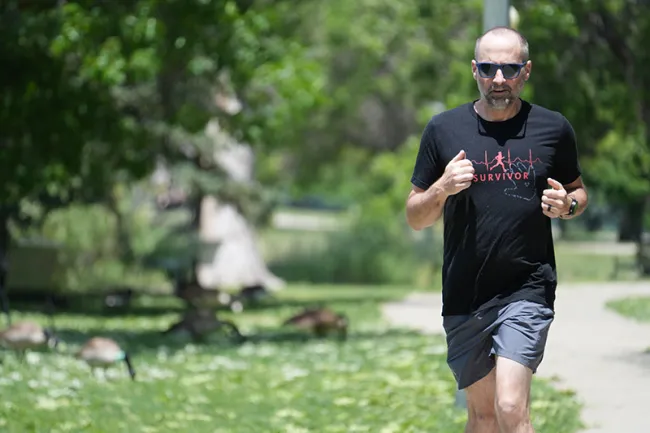
Jon Frohlich has hiked hundreds of mountains in Colorado, including all 58 of the 14ers, over more than 20 years.
But his finish at the 2026 Colfax Half Marathon on May 16, which came six months after he nearly died of a heart attack, was the most emotionally rewarding trek of his life.
Frohlich, 48, had been healthy his entire life and had no family history of heart problems before he headed up the foothills west of Denver on Nov. 15 with a friend. So when he started feeling strange during the hike, he assumed he must be getting sick. He felt nauseous and sluggish, and his heart rate and breathing felt off.
He stopped, said goodbye to his friend, headed back to his car and started driving home. On Sixth Avenue near Kipling Street, he felt numbness in his arms and legs, chest pain and the terrifying realization that something was seriously wrong.
He called his wife and kept driving toward Denver Health, a hospital he’d never visited in two decades of living in Denver. He walked into the Emergency Department and told a nurse, “I don't know what's happening; something's really wrong.”
Soon after, cardiologist Joseph Burke, MD, broke the news: “You’re having a heart attack, and we’re going to fix it.”
Road to recovery
Frohlich was experiencing a total blockage in his left anterior descending artery, the kind of heart attack often called the “widow-maker.” He later learned that if the clot had been in a different place, he likely would have died before reaching the hospital.
“Everybody was amazingly professional, and we had such a great experience,” Frohlich said. Everybody was so caring and wonderful.”
That kind of coordinated care is provided to all trauma patients who enter the Emergency Department. Denver Health's Level I trauma center is one of the world's leading trauma centers and is the only one in Denver. It recently completed its Level 1 trauma recertification from the Colorado Department of Public Health and Environment, with no deficiencies noted and several program strengths noted by surveyors.
After two days in the hospital, Frohlich went home. But recovery, including cardiac rehabilitation at Denver Health, brought a new challenge he hadn’t anticipated, which was learning to trust his body again.
While jogging, he noticed every sensation in his chest, every change in his breathing, every number on his heart rate monitor.
“Is it happening again?” he wondered.
Cardiac rehab helped him work through that fear. Amanda Hajoglou, the lead clinical exercise physiologist for Denver Health’s cardiac rehab team, gave him the encouragement he needed to keep moving forward.
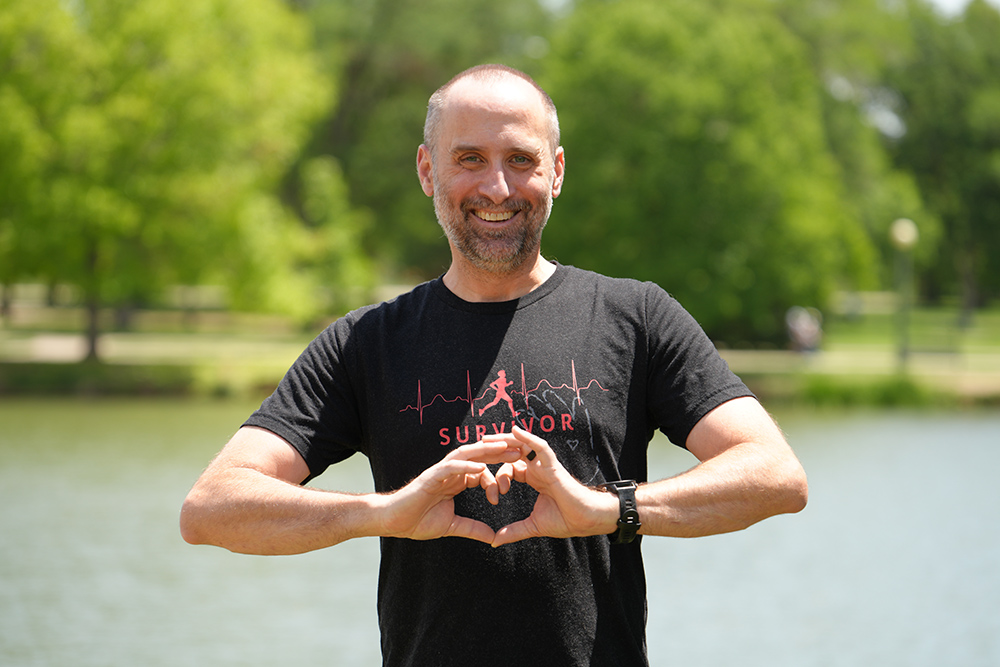
Overcoming fear
By spring, with clearance from his doctors, Frohlich set a goal of running the Colfax Half Marathon. In the months leading up to it, he trained to keep his pace and heart rate down. Still, he couldn’t shake the fear that something might go wrong.
On the day of the race, Frohlich, in his final mile, was overcome with emotion, feeling as if he had outrun the fear that had been following him for six months.
“I’m going to actually do this. I’m fine,” he thought.
When he crossed the finish line, he went searching for his wife and 4-year-old daughter in the massive crowd, eventually finding them and sharing a moment he’ll never forget.
“We had a crying, wonderful reunion,” Frohlich said. “It just felt like such a weight off my shoulders. I felt like I was back in some sort of way.”
Frohlich’s next challenge is returning to the high-altitude mountaineering he loves. He is hesitant about being that far from medical help. But finishing the half-marathon gave him the confidence that he can overcome that fear, too.