September 01, 2026
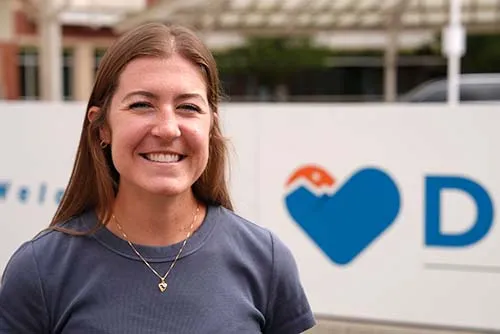
July 18 is a day Molly Onders can’t remember but one she’ll never forget. It’s the day her heart stopped, and it’s the day the Denver community pulled together and saved her life.
It’s the day a total stranger came to her rescue, and it’s the day Denver Health paramedics rushed her to the Emergency Department.
Or, so she’s been told.
Race against the clock
The 28-year-old occupational therapist and avid runner was jogging on the Platte River Trail in downtown Denver. Onders had completed the Colfax Marathon just two months earlier and treated Colorado’s fourteeners like a walk around the block.
One moment, she’s running; the next, she’s waking up in the Medical Intensive Care Unit (MICU) at Denver Health.
Her collapse on the trail and what happened next was pieced together for Onders by her family, paramedics and others who were there.
A woman walking nearby saw her fall, called 911 and started CPR. First responders, including the Denver Fire Department and the Denver Health Paramedic Division, arrived within minutes and took over. They used a defibrillator to deliver an electrical shock and revive her heartbeat, which had been still for five to seven minutes.
“I am super, super lucky,” said Onders, who doesn’t always run in populated areas. “There are a lot of ways that this could have gone very differently.”
A few days earlier, she had been hiking alone in the mountains. Had her heart not waited another couple of days to stop, she knows she would have died.
At Denver Health, Onders was taken quickly to the Cardiac Catheterization Lab and spent several days intubated in the MICU. Doctors found scar tissue in the left ventricle of her heart, though exactly what caused the cardiac arrest remains uncertain. She later received an implanted defibrillator and is undergoing genetic testing as doctors investigate the possibility of arrhythmogenic cardiomyopathy, a genetic heart muscle disease affecting 0.1% of people.
Onders also was treated for third-degree burns on her arms and legs, which baked on the pavement in near-100-degree heat for about five minutes before the paramedics arrived.
Returning to say thanks
While Onders can’t recall her first days in the hospital, she said her family remembers the care.
“They felt comfortable leaving after visiting hours, knowing I was going to be taken care of overnight,” she said.
After two weeks in the hospital, Onder was able to go home. She returned Aug. 6, this time carrying bagels and thank-you notes for the Emergency Department, MICU and Denver Health Paramedic Division.
Because Onders works in a hospital herself, she knows that dozens of people played a role in her care, even if she never met them or can’t remember them.
She said she wanted to give “a small token of appreciation to let them know that what they're doing is so important.”
Recovery now comes with uncertainty that Onders never imagined she would face. She has many follow-up appointments to go, and she doesn’t know if she will be able to return to the kind of running and mountain climbing that filled so much of her life.
For someone who ran a marathon in May and climbed a couple of fourteeners the week before her cardiac arrest, that possibility is difficult to contemplate. But Onders is trying not to measure her future by what she might lose.
Instead of thinking she may never run another marathon, she reminds herself that she got to run one.
And when she thinks about the life that nearly ended on July 18, she doesn’t see much she wishes she had done differently.
“I feel really lucky,” Onders said. “I have a job that I really love. I feel like I have a really incredible community of family and friends.”