Comprehensive Thoracic Surgery Care in Denver
Our Thoracic Surgery team provides comprehensive care for diseases of the chest, including the lungs, esophagus, mediastinum and chest wall. We combine advanced surgical techniques with a patient-centered approach to treat both benign and oncologic conditions, including lung cancer, esophageal disorders and minimally invasive thoracic procedures. Our multidisciplinary team works closely with pulmonologists, oncologists and other specialists to deliver coordinated, high-quality care tailored to each patient's needs.
Thoracic Conditions We Treat
- Slipping rib syndrome
- Lung cancer and other thoracic malignancies
- Esophageal cancer and benign esophageal disorders (e.g., achalasia, reflux)
- Mediastinal masses (thymoma, lymphoma, cysts)
- Pleural diseases (pneumothorax, pleural effusion, mesothelioma)
- Chest wall tumors and deformities
- Rib and sternal fractures (acute or chronic)
- Benign lung nodules and pulmonary infections
- Tracheal and airway disorders
- Minimally invasive thoracic conditions (via VATS or robotic-assisted surgery)
- Thoracic outlet syndrome
- Median arcuate ligament syndrome
- Trauma-related thoracic injuries
Thoracic Surgeries and Procedures We Perform
Lung Surgery
- Lobectomy (removal of a lung lobe)
- Segmentectomy / wedge resection (removal of part of a lung)
- Pneumonectomy (removal of an entire lung)
- Video-assisted thoracoscopic surgery (VATS)
- Robotic-assisted lung surgery
Esophageal Surgery
- Esophagectomy (removal of all or part of the esophagus)
- Fundoplication for reflux
- Heller myotomy for achalasia
- Endoscopic and minimally invasive esophageal procedures
Mediastinal Surgery
- Thymectomy (removal of the thymus)
- Resection of mediastinal masses and cysts
- Surgery for lymphoma involvement in the mediastinum
- Mediastinoscopy
Pleural Procedures
- Pleurectomy / decortication
- Thoracentesis (fluid removal)
- Pleurodesis (preventing recurrent pleural effusions or pneumothorax)
Chest Wall Surgery
- Resection of chest wall tumors
- Repair of chest wall deformities or trauma-related injuries
- Surgical rib stabilization for slipping rib syndrome (Hansen procedure)
Tracheal and Airway Procedures
- Tracheal resection and reconstruction
- Bronchial stent placement
- Endobronchial valve placement and removal
- Airway repair for stenosis or obstruction
Minimally Invasive and Robotic Procedures
- VATS and robotic-assisted resections for lung, esophagus and mediastinum
- Video-assisted or robotic-assisted thymectomy and mass removal
- VATS and robotic-assisted first rib resection for thoracic outlet syndrome
Trauma-Related Procedures
- Rib plating of rib fractures
- Emergency chest trauma repair
- Management of hemothorax or pneumothorax
Slipping Rib Syndrome Treatment
Slipping rib syndrome (SRS), also called costal cartilage subluxation, is a cause of chronic and often debilitating chest wall pain. It happens when the cartilage that connects the lower ribs (the false ribs, ribs 8 to 10) wears down or is disrupted, allowing a rib to slip and move on its own. That abnormal movement can irritate or trap the intercostal nerves that run between the ribs.
Many patients with SRS have seen several doctors and had multiple imaging studies without finding an explanation for their pain. Our surgeons treat SRS with surgical rib stabilization (the Hansen procedure), which stabilizes the cartilage at the front of the chest to relieve pressure on the nerve and restore normal chest wall function.
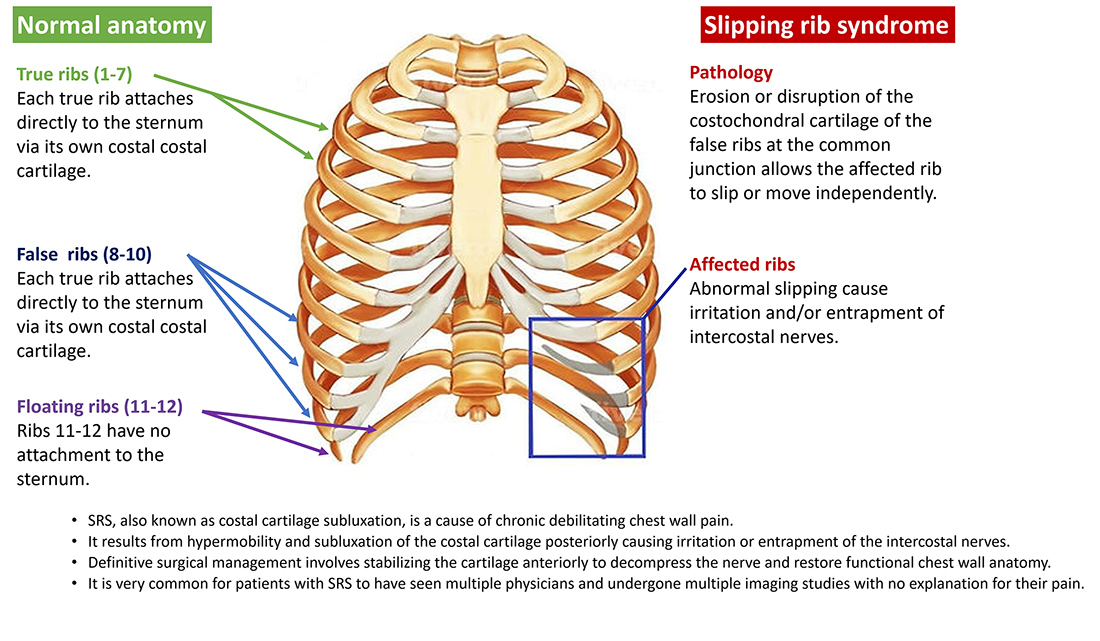
Image description
A front-view illustration of the human rib cage, with labels on the left describing normal anatomy and labels on the right describing slipping rib syndrome.
Normal anatomy: True ribs (1 to 7) each attach directly to the breastbone (sternum) through their own costal cartilage. False ribs (8 to 10) connect to the sternum indirectly, through cartilage joined to the rib above. Floating ribs (11 and 12) have no attachment to the sternum.
Slipping rib syndrome: Pathology: erosion or disruption of the costochondral cartilage of the false ribs at their shared junction allows the affected rib to slip or move independently. Affected ribs: a box highlights the lower ribs on one side of the rib cage, where shaded outlines show ribs that have slipped out of their normal position. This abnormal slipping causes irritation or entrapment of the intercostal nerves.
Key points shown below the diagram: SRS, also known as costal cartilage subluxation, is a cause of chronic debilitating chest wall pain. It results from hypermobility and subluxation of the costal cartilage, which moves backward and irritates or traps the intercostal nerves. Definitive surgical treatment involves stabilizing the cartilage at the front of the chest to decompress the nerve and restore functional chest wall anatomy. It is very common for patients with SRS to have seen multiple physicians and undergone multiple imaging studies with no explanation for their pain.
Meet the Thoracic Surgery Team
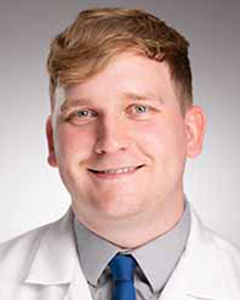
Daniel VanDerPloeg, MD
Trauma, Acute Care, & Thoracic Surgeon
Associate Chair, Trauma & Acute Care Surgery
Chief of Thoracic Surgery
Daniel VanDerPloeg, MD, grew up in a small town in rural, southeastern Kentucky. He completed his undergraduate studies in biology at Eastern Kentucky University. He then attended medical school at the University of Kentucky College of Medicine in Lexington, KY under a merit scholarship for students from underserved areas of southeastern Kentucky. He obtained his MD in 2015 and moved to Colorado to complete a general surgery residency at the University of Colorado.
He finished residency in 2020 amidst the COVID-19 pandemic and decided to advance his training with a fellowship in surgical critical care. The critical care fellowship also provided additional experience within the field of trauma surgery. He always had a strong clinical interest in thoracic surgery and was excited to take a position as a trauma and thoracic surgeon at Denver Health after completion of training.
During his time at Denver Health, he has obtained many leadership roles in both trauma and thoracic surgery. He provides dedicated care and advocacy for Denver's vulnerable uninsured patients through his work on the Medical Necessity Committee. In his free time, he is an avid reader, mostly fantasy fiction, and completed 52 novels in 2020!