You Decide Denver is funding project ideas from people just like you to influence Denver’s approach to substance use support and recovery.
1,865 people died from an overdose in Colorado in 2023.
Substance misuse in the Denver community impacts all of us. We believe the people closest to the challenges are the people closest to the solutions. You Decide Denver (YDD) brings people together people who want to help find solutions to the overdose crisis happening in our city.
YDD invites Denver residents to decide how to spend $100,000 on innovative community-driven, non-clinical projects related to substance use support, recovery, and harm reduction.
Phase Five: Announcing Winning Projects
After a community-led advisory process conducted by the YDD Budget Delegate team, final funding decisions have officially been made.
Following the review of 21 incredibly thoughtful proposals submitted from organizations and community groups across the Denver metro area, the following projects were selected for funding through the 2026 You Decide Denver initiative:
Selected Projects
The Journey Wall & The Living Gallery Project
An arts program within a residential recovery community where participants engage in weekly workshops, storytelling and collaborative art projects. Through creative expression and public art displays, the project supports healing, connection and stigma reduction around recovery.
Lxs Jovenes Leadership Lab / Healing with Arts
A youth-centered program that combines art, storytelling and harm-reduction education for teens with lived and living expertise. Participants help lead creative projects that build confidence, strengthen community connection and amplify youth voices.
Thank You to Our Community
We want to extend a sincere thank you to everyone who contributed to this process, including:
- Community members who submitted project ideas
- Individuals who participated in the public vote
- Organizations and groups that submitted proposals
- Our Budget Delegate team and community advisory group
- Community partners and organizations that supported outreach and engagement throughout the process
This project would not have been possible without the leadership, vulnerability, creativity and lived experience shared throughout every phase of You Decide Denver.
What Happens Next
Over the coming months, YDD and Denver Health’s Center for Addiction Medicine (CAM) will work alongside funded project teams as implementation begins.
Next steps include:
- Finalizing project agreements and onboarding
- Launching funded community projects
- Ongoing collaboration and technical support
- Sharing updates, impact stories and community outcomes
Stay Connected
Additional updates, project highlights and implementation progress will continue to be shared on the You Decide Denver website and Denver Health social media channels.
Phase Four: Request for Proposal (RFP) Submissions
Update: RFP submission window is closed, selection process underway
The submission window for YDD RFPs officially closed on April 3, 2026 at 5 p.m. MST.
We received 21 proposals from organizations and community groups across the Denver metro area seeking to implement projects in Harm Reduction and Creative Expression, the two priorities selected by the community through the public vote.
Thank you to everyone who submitted proposals and participated in this process.
Key Dates & Deadlines
Our team, made up of community leaders and partners, will now begin reviewing all submitted proposals.
Final project selections will be announced once the review process is complete, which we anticipate to be ready in early May.
CAM Academy: Community Trainings & Resources
While the proposal review process is underway, we invite community members and organizations to explore CAM Academy, a training and technical assistance program from Denver Health’s Center for Addiction Medicine. CAM Academy provides education, training and technical assistance on trauma-responsive substance use disorder treatment for Colorado and the surrounding states.
Feel free to check out their workshops including Trauma Responsive Care and Compassionate Care for People with SUD. These 3-hour long workshops can be found in-person or virtually and are focused on increasing knowledge and skills to support people who use drugs. You can find all the upcoming workshop dates on the CAM Academy webpage here.
For a bite-sized learning opportunity, check out CAM Academy's online learning series geared towards outreach teams, peer support specialists and community members supporting people who use drugs. These community-focused online modules build knowledge, empathy, and practical tools through a combination of self-paced modules. Topics center harm reduction, compassion, and real-world strategies for supporting individuals, families, and communities.
- Substance Use Disorder 101: Examining the Impact of Addiction
- Words and Actions Matter: Disrupting Substance Use
- Utilizing a Trauma Responsive Approach
If you have any questions, please reach out to CAMAcademy@dhha.org. Community members are encouraged to explore these learning opportunities and resources while we move through the YDD proposal review process.
Funding Priorities as Voted on by the Denver Community
Funding Priorities as Voted on by the Denver Community
After receiving more than 40 project ideas from community members, we organized them into six non-clinical categories that reflect shared needs and emerging priorities. Those categories were placed on a public ballot, and the community voted to determine which project types to fund. The results are in.
Community members ranked six funding categories by priority (1 = highest, 6 = lowest). The following categories received the highest number of top rankings (1 or 2):
Harm Reduction
Efforts that provide supplies, education or outreach to keep people safe and reduce overdose risk.
Creative Expression
Projects that use art, music or storytelling to promote healing and recovery.
To learn more about community participation in the voting process, click here.
(Closed) RFPs now open for non-clinical, community-led projects in Harm Reduction and Creative Expression
Goal: To fund non-clinical, community-driven projects in Harm Reduction and/or Creative Expression serving Denver-metro communities.
Eligibility: 501(c)(3) nonprofits, fiscally sponsored groups, and coalitions or partnerships with a 501(c)(3). Projects must focus on Harm Reduction and/or Creative Expression and serve Denver-metro communities. For-profits may be considered on a limited basis.
Total Funding Available: $100,000 (projects may request up to $100,000; 1–2 awards anticipated).
Key Dates & Deadlines
Deadline for Written Inquiries: Friday, Feb. 27, 2026, at 5 p.m. MST
Have Questions? Submit your question here.
Submission Deadline:
RFPs must be submitted to YouDecideDenver@dhha.org by April 3, 2026, at 5 p.m. MST (Late applications will not be accepted.)
Materials from our Virtual Community Info Sessions:
Q&As from the sessions
- Can I submit a combination of written materials and video as part of my proposal?
Yes. Applicants may submit a combination of written and video materials. If using multiple formats, please clearly indicate which parts of the proposal are addressed in each format to ensure all application questions are fully covered. - Is there a length limit for video submissions?
No. There are no specific limits for video length or written responses. Applicants are encouraged to be clear and concise while ensuring all proposal questions are addressed. - Is there a minimum funding amount that can be requested?
No. No minimum funding amount is required for proposals. - What reporting is expected for this one-year grant?
Selected projects will be expected to track and report on project activities and progress. Reporting expectations will be determined during the contracting process. - Can a proposal address both project categories (harm reduction and creative expression)?
Yes. Proposals may address one or both categories if the project meaningfully aligns with them. - Can two organizations apply together?
Yes. Collaborative proposals are allowed. Applicants should clearly identify the lead organization responsible for administrative and contracting purposes. - Can funds be used to hire a full-time staff member?
Yes. Funding may cover staffing costs if the role supports the implementation of the proposed new project or services. Applicants should keep in mind that YDD funding supports a one-year project period. - Can a project apply if it requires additional or braided funding?
Yes. Applicants should disclose any additional funding sources in their proposal and describe how those funds would support the feasibility of the project. - Can someone with national lived expertise be involved in the project?
Yes. However, funded projects must serve the Denver-metro community, and applicants are encouraged to consider local expertise where possible. - Are letters of support allowed?
Yes. Letters of support are referred to as letters of recommendation in the RFP. They are encouraged but not required. Please refer to page 9 of the RFP for more information. - Does the fiscal sponsor or fiscal entity need to be based in Denver?
No. However, the proposed project must serve Denver-metro communities. - What does “new project” mean for this funding opportunity?
YDD funding is intended to support new projects or initiatives, not to continue an existing program as it currently operates. Expansions may be eligible if they introduce a new approach, service, or component. - Are there specific demographics the project must serve?
Projects should focus on people affected by substance use and must serve Denver-metro communities. Applicants are encouraged to consider the community-identified priorities when applying. - What if our program serves people with substance use disorder but not exclusively?
Projects may serve broader populations; however, the proposed initiative should clearly focus on non-clinical efforts that support people affected by substance use. - Does “new or innovative” mean new to the community or new to the organization?
In general, proposals should introduce a new approach, idea, or initiative for the applying organization that supports harm reduction and/or creative expression. - Are there specific partnerships that YDD is prioritizing?
Partnerships and collaborations are encouraged but not required. YDD does not prioritize specific partnerships. Applicants should review the RFP to ensure their proposal aligns with the non-clinical focus and the value of lived and living expertise.
Phase Three: Voting (Closed)
Project Updates and Idea Collection
Thanks to the community, we collected more than 40 project ideas from people with lived experience, community members, organizations and partners.
From those 40 ideas, we created six ballot categories that best reflect the community's needs, priorities and recurring themes.
We invite everyone in our Denver community, organizations, service providers, and especially people with lived experience, to help shape the next phase of this project by voting for the categories you want implemented.
VOTE: Make your voice count!
We’re excited to launch the You Decide Denver (YDD) 2025 ballot! Now it’s your turn to help decide how $100,000 will be invested in community-driven, non-clinical projects supporting substance use recovery, harm reduction, and support services.
How voting works:
- Review each project category and description carefully
- Rank the projects in order of priority from 1 - 6, with 1 being the highest priority.
- Submit your ballot
The ballot categories you'll vote on:
Creative Expression
Projects that use art, music or storytelling to promote healing and recovery.
Wellness and Pro-social Connection
Activities that build life skills, support well-being, or connect people through nature or movement.
Harm Reduction
Efforts that provide supplies, education or outreach to keep people safe and reduce overdose risk.
Peer Support
Programs led by people with lived experience offering guidance, mentorship, connection and community.
Family and Community Support
Initiatives that strengthen family relationships or make recovery programs more accessible.
Education and Awareness
Campaigns and trainings that reduce stigma and expand knowledge about recovery and harm reduction.
Phases One and Two: Planning and Idea Collection (Completed)
How to get involved
You Decide Denver is funding non-clinical project ideas using the Participatory Budgeting process. Non-clinical projects meet people where they are with information, education, screening and support options to help them on their recovery journeys.
Share your non-clinical project ideas such as:
Peer Support or Activity Groups
Support or activity groups facilitated by individuals with lived experience, offering mutual support, shared knowledge, and empowerment through relatable guidance.
Public Awareness Campaigns
Efforts designed to inform and educate the public about specific issues, often using media, events, or storytelling to promote understanding and spark community action.
Trauma-Informed Educational Workshops
Educational or skill-building sessions that prioritize safety, trust, and empowerment, recognizing the widespread impact of trauma and integrating that knowledge into the content and approach.
Stigma Reduction Programs
Initiatives aimed at challenging stereotypes, misinformation, and discrimination associated with specific experiences or identities—often through education, storytelling, and humanizing narratives.
Harm Reduction Initiatives
Programs or projects that prioritize health and dignity by reducing the negative consequences of behaviors like drug use without requiring abstinence, offering practical tools like naloxone, clean supplies, and safe use education.
Community Outreach Projects
Localized efforts to engage, support, and uplift communities by meeting people where they are, often involving direct service delivery, relationship-building, and amplifying community voices.
Have a project idea? Here are the guidelines to keep in mind:
- Projects should be manageable given community resources and funding scope
- Projects must be focused on supporting people impacted by substance use disorders
- Projects must reflect You Decide Denver’s values of compassion, honesty, hope, trust, inclusion and equity
Stay informed and vote on project ideas
You don’t have to submit a project idea to get involved! Once project submissions close, You Decide Denver’s committee of Community Champions, comprised of people with lived experience, will review and organize the project submissions for voting. Voting will be open to everyone in the community. You’ll have the opportunity to vote on the projects you think You Decide Denver should fund.
Revisit this webpage for updates about the voting process once project submissions are closed.
Block Party Highlights
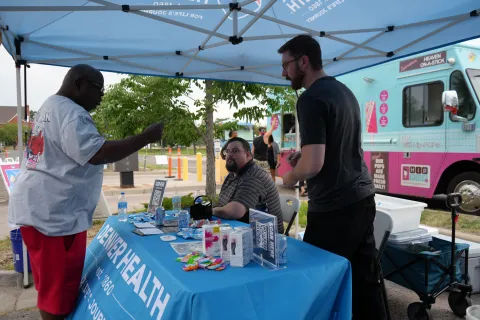
Our community block party was a huge success! More than 45 organizations joined us for fun, spaces for connection, and resource sharing. A huge thank you to all of the community organizations included below that participated in our event.
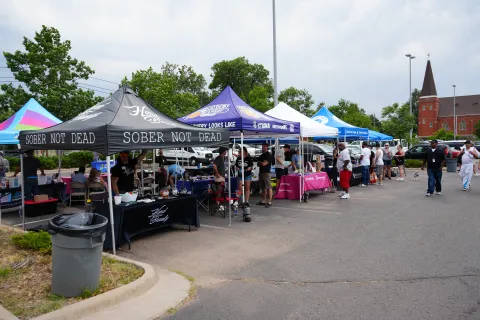
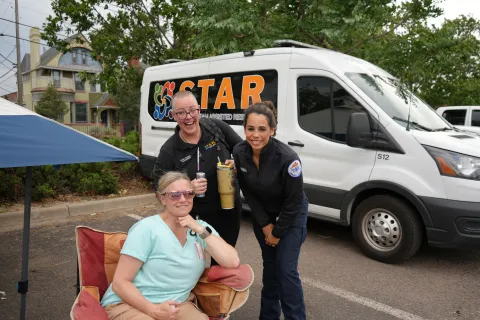
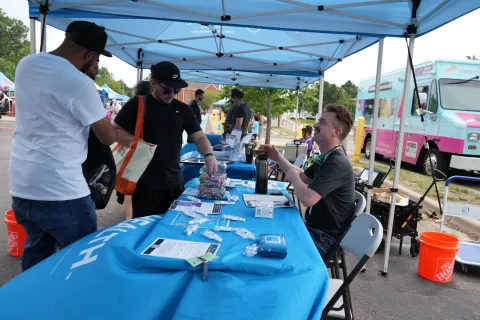
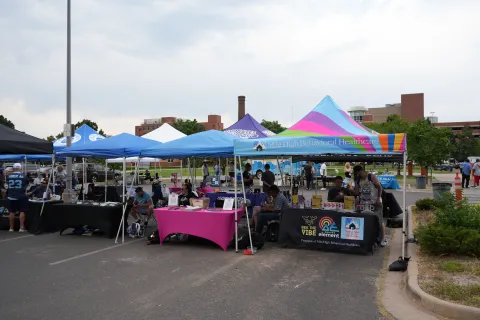
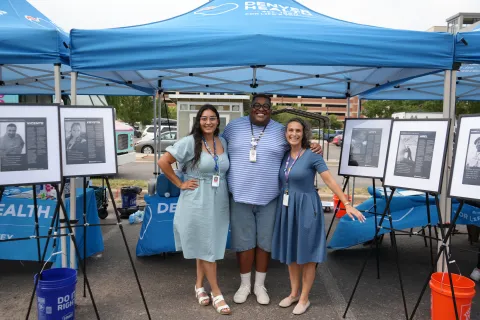
- Denver Health’s Center for Addiction Medicine (CAM)
- Denver Health's Peer Support Specialist Team
- Denver Health Marketing Team
- EYE for Prevention
- Art from Ashes
- Youth Pride Coalition
- Over the Rainbow Project
- SPCAI PAWSitive Recovery
- C.H.E.F
- Curawest
- Hazelbrook Recovery
- Promotores De Esperanza
- Colorado Artist in Recovery
- Sober Is…
- Bicycle Health
- Denver Health’s STAR Team
- The Don't Look Back Center
- Advance
- Denver Springs
- Dogstar Recovery Revolution
- Mile High Behavioral Health Care
- Hard Beauty
- Advocates for Recovery Colorado
- Lift the Label & I Matter
- Hornbuckle Foundation
- Harbor Lights Salvation Army
- Heroin Anonymous
- Sober AF Entertainment
- Sobriety House
- Love Prevails
- Transforming Our Communities Alliance (TOCA)
- Denver Health’s MOMAT Team
YDD In the Media
- You Decide Denver invites community to shape substance use recovery efforts
- Community Corner: You Decide Denver with Jason Vitello and Sam Ciaravola - The Drop
Frequently Asked Questions
No. However, funded projects must serve Denver-metro communities.
Participatory budgeting (PB) is a process where community members help decide how public funds are spent. In YDD, people with lived and living expertise of substance use help shape funding priorities and inform project selection.
Yes. YDD funds non-clinical, community-based initiatives focused on supporting one or both of the project categories selected by the community during the community vote.
Community-Selected Project Categories
- Harm Reduction
Efforts that provide supplies, education or outreach to keep people safe and reduce overdose risk. - Creative Expression
Projects that use art, music or storytelling to promote healing and recovery.
No. YDD funding is intended to support new, innovative projects, not to sustain or expand existing programs as they currently operate. While proposals may build on prior work or partnerships, they must introduce a new idea, approach or creative solution that advances harm reduction and/or community well-being in a meaningful way
No. You do not need a finalized budget to submit a proposal. Budget details can be refined if your project moves forward.
Eligible proposals are reviewed and scored using the evaluation criteria in the RFP. The review panel includes community budget delegates, individuals with lived and living expertise, and Denver Health administrators.
Selected applicants will enter into an agreement outlining scope, timeline and payment terms. YDD is committed to transparency throughout the process.
Once submitted, you will receive a confirmation that your application has been received.
Applicants are responsible for ensuring all required sections of the application are fully completed. Incomplete applications will not be considered for review.
Applicants may edit their applications until Friday, April 3, 2026, at 5:00 p.m. MST. After this deadline, submissions will be considered final, and no additional changes will be accepted.
All applicants will be notified of the outcome of their submission, regardless of selection status. Selected projects will be announced on the YDD website.
The process spans several months and includes proposal review, contracting, and implementation. A timeline is available on our website.